

The African Finance and Economics Association (AFEA) held its annual conference this year. It collaborated with the Department of Economics and Development Studies at the University of Nairobi. This event took place from July 16 to 18, 2025. The conference was themed “The Future of Work: Building a Better Africa for Tomorrow’s Generation through Sustainable Development and Innovation.” It convened several major stakeholders across Africa. It attracted speakers and presenters from the World Bank and Africa’s major Central Banks. Speakers also came from academia, the international development sector, and civil society. Early career researchers were also in attendance. Sub-themes included: Digitalisation and Technological Innovation in Africa. Human Capital and Skills Development. Financial inclusion. Governance and accountability. Climate change and green growth. Natural resources for sustainable economic growth.
I had the opportunity to present my first-ever scientific conference paper after my PhD studies. It was titled ‘Beyond the Resource Curse: Peripheral Perspectives on Africa’s Sustainable Future.’ The paper builds on my ongoing doctoral research in South Sudan’s oil governance landscape. It analyzed governance and institutional practices across Ghana and South Sudan. The study aimed to demystify and confirm the resource curse thesis. Findings included a robust and better-governed oil sector in Ghana underpinned by inclusive governance approaches. On the other spectrum, South Sudan’s exclusive and elitist models hinder development. Unstable political and economic systems also curtail resource-led progress in the war-torn, oil-rich nation. The conference gave me a unique opportunity to receive insightful comments on my paper. I received feedback from a distinguished pool of scholars. This included early-career and seasoned researchers. Prof. Samuel Amponsah of the Tokyo International University, a respected economist, provided feedback. He suggested the paper would benefit from an in-depth comparison. This includes the traditionally acclaimed resource curse basket cases, such as Nigeria versus Ghana. In Prof. Amponsah’s view, dragging Nigeria into the mix would provide deeper institutional perspectives. These include insights from a well-established oil-led African democrat. It would be compared alongside a fledgling and unstable economy of South Sudan. Nonetheless, Prof. Amponsah was impressed by the depth and breadth of the paper. He stated that it contributes towards a worthwhile yet overlooked terrain.
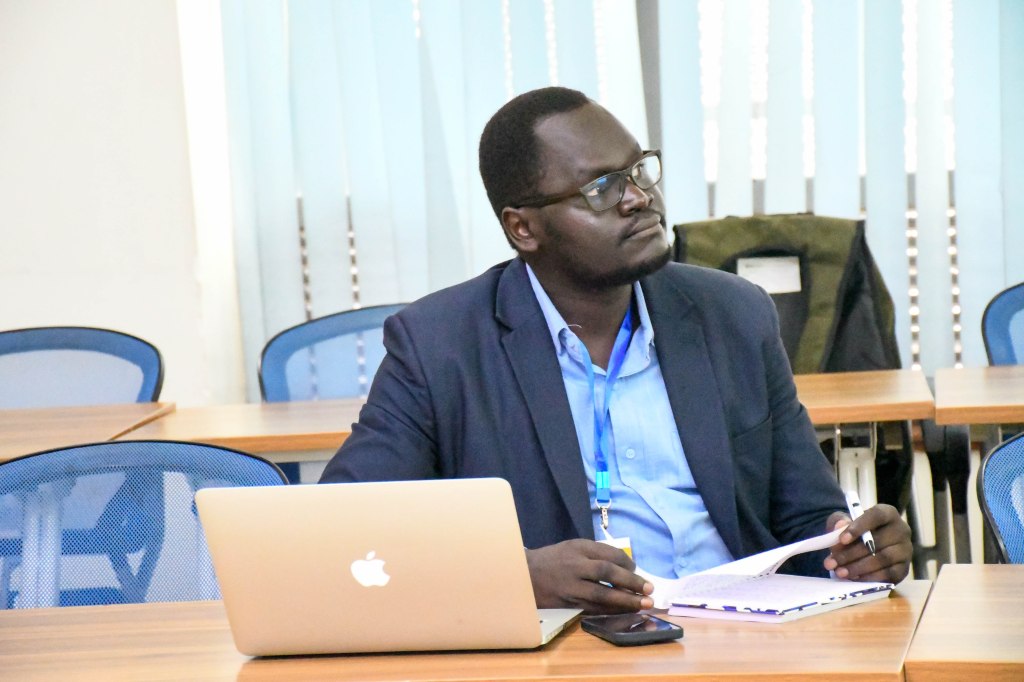
Besides the opportunity to share knowledge, the conference allowed me to learn a great deal. It also gave me a chance to network with some of Africa’s best minds in the field of sustainable development.

Additionally, I had the privilege of discussing a paper titled ‘Public-Private Infrastructure Investments in COMESA.’ Powel Murunga, a doctoral student in Economics at the University of Nairobi, presented it. Through this paper, Murunga sought to explore Public-Private Infrastructure (PPI) in infrastructure. He aimed to establish its relationship with agricultural exports within 21 developing COMESA member countries during 2013–2023. With a strong quantitative core, the paper revealed several insights. This included a strong and positive association between PPI in infrastructure and agricultural exports. This impact was felt strongly in high-income COMESA countries. The relationship was also true in reverse. Nonetheless, the paper would have been stronger if it relied on fewer countries as opposed to spreading itself too thinly. The 21 countries studied had differing trading dynamics. These dynamics and levels of growth served as significant barriers to separating the losers from the winners.
The conference was a learning ground. It highlighted how Africa’s economic blueprint could be harnessed for the continent’s limited research stockpiles. As revealed by Prof. Abbi Kedir of the African Economic Research Consortium (AERC), Africa’s research and policy landscape remained untapped. He called upon early career researchers to take the mantle. In his view, Africa needed to invest in evidence-led research and policy discourse. This investment would enable a policy shift among the continent’s policymakers. He presented those policymakers as stubborn and difficult to deal with. According to Prof. Kedir, African PhD students needed acknowledgement. They should be engaged in the broader research frameworks earlier in their training. He disclosed that this goal presently occupies the AERC program design and implementation.

This goal was shared by Prof. Samuel Amponsah, who chaired this year’s conference convening. In Prof. Amponsah’s view, research was critical, though he stressed that applied research was even more critical in Africa. Yet research-facing initiatives like Prof. Amponsah’s AFEA are riddled with logistical and financial challenges that continue to bedevil the continent’s growing research domain. Prof. Amponsah, like many during the 3-days conference, attributed success to collaboration, a mission he said needed to be supported. He asked young African scholars to contribute at least 20 USD to AFEA. This would support the association’s fledgling journal – the Journal of African Development (JAD). JAD publishes high-quality, peer-reviewed articles by African economists and development thinkers.
Yet the limited finances were just one of the many challenges confronting Africa’s nascent research environment. The continent also encounters challenges of an outdated curriculum. This has stubbornly stood between a rapidly modernizing world and outdated knowledge and skill sets. My university colleague and comrade, Dr. Socrates Majunes, a rapidly rising mid-career academic, attempted to change that thinking. He embedded a well-curated economics challenge competition in the conference proceedings. Four Kenyan public and private universities participated. The Economics Challenge Competition tested the knowledge and skills of eight highly motivated undergraduate students. These students came from the Universities of Nairobi, Strathmore, Kabarak, and Multimedia. The challenge deployed innovative and creative quizzes. It confronted the pre-existing rote learning. This traditional learning approach has crippled Kenya (if not Africa)’s higher learning environment for decades. I found the session extremely innovative. The participating universities’ students and teachers agreed. They asked for more of the same. It was a revelation of the missing beans in the country’s higher intelligentsia.
 Matai Muon